
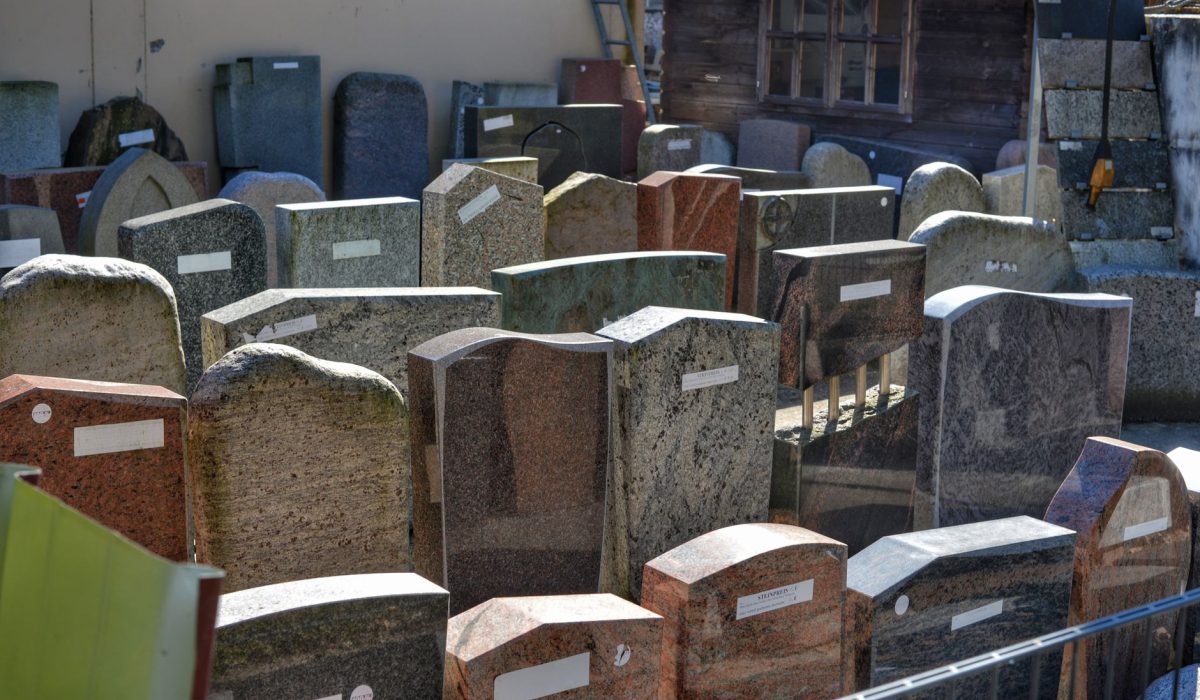
A headstone can feel like the one decision that has to say everything. Families may have managed a funeral, answered dozens of calls, and sorted through paperwork before anyone asks what should be carved in stone. Suddenly, choosing a shape or a few words carries more weight than expected.
It helps to make the decision smaller. You are choosing a marker for a particular place, with enough room for accurate information and something that feels right for the person being remembered. You do not have to fit an entire life onto its face.
The practical questions deserve attention early because they give the personal choices room to develop. Once you know what the cemetery allows, what the complete project will cost, and who will approve the design, you can spend time on the details that matter to your family. The following approach leaves space for both careful planning and changing your mind before production begins.
Start with the place where the memorial will stand
Before collecting design ideas, contact the cemetery office with the section, lot, and grave information. Ask for the current monument requirements for that exact location. A photograph of a nearby stone is useful inspiration, but it should not replace written confirmation of what is allowed on your plot.
Ask which marker styles are permitted and how the cemetery measures the maximum size. Width might refer to the base rather than just the upright portion. Height might include several components. Have the supplier and cemetery clarify those terms on a drawing so everyone is discussing the same dimensions.
You should also identify who installs the monument and who arranges its foundation. These tasks may involve a different business from the one creating the stone. Learning that early prevents a finished memorial from arriving before anyone is ready to receive it.
If you can visit, pay attention to the setting. Is the grave close to a path? Will relatives usually approach from the front or the side? Does the surrounding planting make the area feel open or enclosed? These observations can help you evaluate a design without turning neighboring monuments into a rulebook.
Decide what the headstone needs to communicate
Write down the essential information before browsing decorative options. This usually begins with the person's name and dates, followed by any wording the family considers especially important. Keep a separate list for possible additions, such as a small emblem, a nickname, or a brief inscription.
The distinction is useful when space becomes tight. If every idea has equal priority, the designer may be asked to fit too much onto a limited surface. A clear order of importance makes editing less personal. Reducing a decorative border can be easier than shrinking the name to accommodate it.
Consider who will read the memorial. Close relatives know the stories behind a nickname. A grandchild visiting in twenty years may need the full name to understand the connection. Both can have a place, but they do different jobs.
There is also room for a very simple inscription. A name, dates, and one carefully chosen detail can feel complete. Families should not feel obliged to add a quotation because an empty area appears in the first proof. Open space can make the words easier to see and give the design a calmer appearance.
Compare forms using the same priorities
A useful comparison begins with your requirements rather than the most elaborate photograph. Consider the writing space, the way the face will be viewed, and the proportions of the complete memorial. A taller design is not automatically a better fit for a long inscription, particularly when decorative elements occupy much of the available area.
If a vertical monument is permitted, browsing Upright Headstones can help you compare single and companion layouts, base arrangements, and the relationship between the name and the surrounding design. Save a few examples and write down what you like about each one. “Clear lettering” is a more useful instruction than “something like this.”
Limit the first shortlist to a manageable number. Three substantially different options can reveal more than twenty slight variations. One might favor a simple rectangular face, another a curved top, and a third more space for two names. Compare them against the same written priorities.
When family members disagree, ask each person to explain the feature they value. Someone requesting a larger stone may really want the name to be easy to find. Someone choosing a modest design may be responding to the person's own preferences. Those concerns can sometimes be addressed within one design.
Set a complete budget before adding details
Ask for a written description of what the monument price includes. The stone, lettering, artwork, delivery, foundation, and installation should be clear enough that you can see which party is responsible for each item. A low starting price is difficult to compare with a higher quote that includes more work.
Keep optional additions separate while you decide. Seeing the cost of a portrait or extra engraving as its own line makes the tradeoff easier to discuss. It also helps the family protect its priorities if the complete estimate is higher than expected.
A practical budget discussion can be brief and private. The person coordinating the order can ask contributors what they are comfortable spending, then communicate one agreed limit to the supplier. This avoids turning every design revision into another conversation about who can contribute more.
Leave room in the plan for an unresolved charge until it has been confirmed. Do not treat an unknown installation fee as zero. Ask the relevant provider for the amount or a written estimate and any conditions that could change it. You can make a confident design decision once the missing pieces are visible.
Give family conversations a clear shape
A group message is useful for sharing photographs, but it can become confusing when wording changes arrive in different threads. Choose one person to collect comments and communicate with the designer. That role is administrative; it does not have to mean that person chooses everything alone.
Arrange one conversation about the main decisions before requesting a proof. Discuss the preferred name, general style, whether another inscription will be added later, and any symbol that needs special care. Record the points of agreement in plain language.
If a relative cannot join, give them a specific way to respond. Asking, “Do you have any corrections to the name or dates?” is easier to answer than sending a design with “Thoughts?” underneath. A focused question is especially helpful when someone is tired or finds the subject difficult.
Disagreement about a phrase may need time rather than another design revision. You can ask the supplier to pause that part while the family checks the wording. Before doing so, confirm how a pause affects the schedule and whether any work has already been authorized. The decision remains easier to change while it is still on paper.
Review the proof in separate passes
The first time you see a design, your attention may go straight to whether it feels right. That response matters, but it is not a complete proof check. Look again with a narrower task.
First, verify the name and dates against the records the family has chosen as its reference. Check spelling, punctuation, initials, and the order of names. Read each line aloud while another person follows the reference document. This simple change in pace can reveal an error that disappears when you skim familiar information.
Next, examine the layout. Ask for the actual dimensions and lettering sizes if the proof does not show them. A design enlarged on a laptop can make a small inscription look more readable than it will be in person. Where practical, print the main inscription at its proposed size.
Finally, review the version itself. Does the proof include every agreed correction? Has an earlier date format returned? Is there enough room for any planned future engraving? Keep the approved file and written specification together. An email that says “approved” should clearly identify the particular version being approved.
Separate production from the installation date
Ask the supplier to explain the stages after approval. Production, shipping, delivery, and installation are separate events. A promise that a stone will be ready to ship during a certain week does not by itself establish when it will be standing at the grave.
Confirm who receives the shipment and how that person will be notified. The cemetery or installer may have its own schedule, access requirements, and procedures for accepting a delivery. Put the correct contact details in the order before the stone leaves the workshop.
If the family hopes to gather on an anniversary, explain that date at the beginning. Ask what can realistically be confirmed and when. It may be possible to plan the visit while leaving the installation date flexible, which is better than sending invitations around an assumption.
Do not feel that a delay in selecting the memorial means the person has gone unremembered. Photographs, stories, visits, and familiar routines can carry that connection while the physical marker is being prepared. The purchase is one part of remembrance, with its own practical timetable.
Keep a small record of the finished decision
Once the monument is installed, save a clear photograph with the final proof, invoice, cemetery contact, and care instructions. Include the exact grave location. These details are easy to forget after the order is complete, yet they can be useful when another relative takes over family records.
If the memorial has space for a later inscription, note what the original supplier said about arranging that work. Record the font and layout information if it is available. Future family members should not have to reconstruct an important plan from a distant photograph.
The decision can be considered finished when the essential information is correct, the approved design fits the setting, and the family understands what it has ordered. You do not need to keep searching for a design that expresses every memory perfectly. A well-considered headstone gives those memories a recognizable place, while the fuller story remains with the people who knew the person.